Cedar Rapids marketing trends are shifting fast, and small businesses that adapt now will pull ahead of competitors still running yesterday’s playbook. The Cedar Rapids market sits at a unique intersection of Midwest practicality and growing tech adoption, making it fertile ground for businesses willing to test modern tactics. Understanding what is working locally, not just nationally, is the difference between wasted budget and real revenue growth.

What Cedar Rapids Marketing Trends Are Shaping Local Business Growth Right Now?

The top Cedar Rapids marketing trends right now center on hyper-local SEO, AI-assisted content, and community-driven brand building. Local businesses are moving away from spray-and-pray advertising toward strategies that speak directly to specific Cedar Rapids neighborhoods, industries, and buying audiences. These shifts reflect broader national patterns, but they carry distinct characteristics in a mid-size Iowa market.

Cedar Rapids sits in a competitive regional corridor that includes Iowa City, Waterloo, and Des Moines. That geography creates pressure for smaller operators to differentiate through local credibility rather than budget alone. Businesses that anchor their marketing in recognizable community context, local landmarks, local events, and regional partnerships, consistently outperform those pushing generic national messaging. According to HubSpot’s 2025 State of Marketing report, 82% of consumers are more likely to choose a brand that demonstrates local community involvement over one that does not.

Awareness-stage marketing in Cedar Rapids is also changing because of how buyers find businesses. Search behavior has shifted toward conversational, question-based queries as AI-powered search tools reshape how people discover local providers. Businesses optimizing for natural language and specific local context, rather than just short-tail keywords, are capturing more qualified traffic at the top of the funnel. Iowa Creative tracks these shifts closely when building local marketing strategies for Cedar Rapids clients.

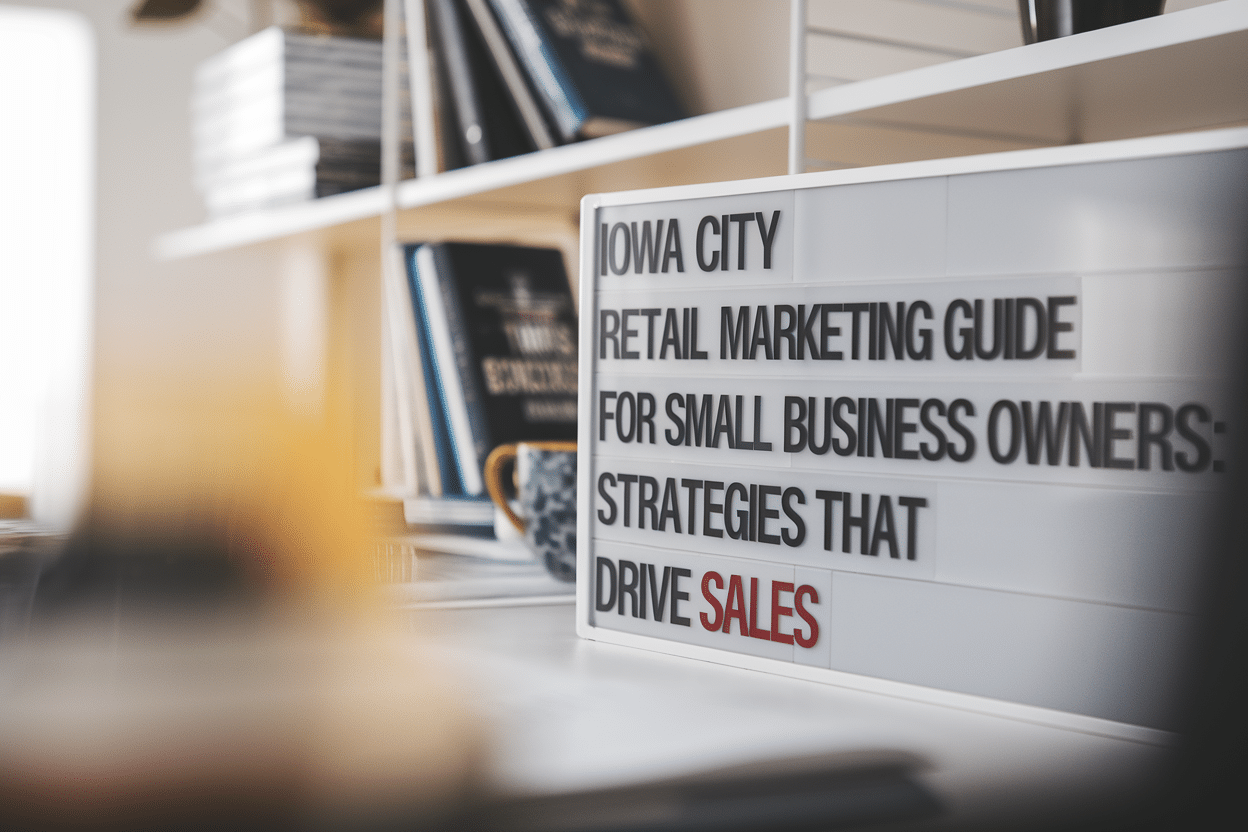
Cedar Rapids marketing trends — professional business image

Which Marketing Strategies Are Actually Working for Cedar Rapids Small Businesses?

The Cedar Rapids marketing trends gaining the most traction combine digital targeting with genuine local relevance. Short-form video, Google Business Profile optimization, and email nurture sequences built around local pain points are delivering measurable returns for small operators in the area. These are not experimental tactics anymore; they are table stakes for competitive positioning in this market.

Short-form video has crossed from consumer platforms into B2B territory in Cedar Rapids. Manufacturing suppliers, professional services firms, and specialty contractors are using brief video content to explain complex offerings in plain language. According to Wyzowl’s 2025 Video Marketing Report, 91% of businesses report that video delivers a positive return on investment, up from 78% just three years ago. For Cedar Rapids businesses targeting regional buyers, a 60-second walkthrough of a process or product builds trust faster than a static webpage ever could.

Google Business Profile optimization is another Cedar Rapids marketing trend producing outsized results relative to its cost. Businesses that consistently update their profiles with posts, photos, and service details are winning local pack placements that drive direct phone calls and website visits. Follow Cedar Rapids marketing conversations and small business tips through Cedar Rapids small business marketing updates to stay current on what is gaining traction locally. Meanwhile, email marketing remains one of the highest-return channels available, with the Data and Marketing Association reporting an average return of $36 for every $1 spent in 2025.

How Are Cedar Rapids B2B Companies Using AI and Automation in Their Marketing?

Cedar Rapids B2B companies are adopting AI marketing tools at a practical, budget-conscious pace that reflects the local business culture. Rather than overhauling entire departments, most small operators are plugging AI tools into specific workflows such as email personalization, ad copy testing, and customer segmentation. This incremental approach lowers risk while still capturing efficiency gains.

AI-assisted content creation is the most widely adopted application among Cedar Rapids small businesses right now. Teams are using tools to draft first versions of blog posts, social captions, and follow-up email sequences, then editing for local voice and accuracy. This cuts content production time significantly without sacrificing the local specificity that Cedar Rapids audiences respond to. According to McKinsey’s 2025 State of AI report, companies that integrate AI into marketing workflows report a 20% to 30% reduction in time spent on routine content tasks.

Marketing automation is following close behind content AI as a priority for Cedar Rapids B2B operators. CRM-connected email sequences, lead scoring, and automated follow-up touchpoints are helping small teams punch above their weight against larger regional competitors. Understanding the real cost structure of these tools is critical before committing budget, and the breakdown of what AI marketing actually costs for small business owners helps Cedar Rapids companies budget accurately from the start.

What Does Smart Budget Allocation Look Like for Cedar Rapids Marketing?

Smart budget allocation for Cedar Rapids marketing trends means concentrating spend on the channels where local buyers actively search and engage. Most small B2B businesses in this market see the best results by splitting investment across search visibility, content creation, and one or two social platforms rather than spreading thin across every available channel. Prioritization beats diversification at small business budget levels.

A common allocation pattern emerging among Cedar Rapids B2B companies in 2026 puts roughly 40% of marketing budget toward search, including SEO and paid search, 30% toward content production and email, and the remaining 30% toward social media and community-based sponsorships. This mix reflects the reality that Cedar Rapids buyers, particularly in professional services and manufacturing sectors, still rely heavily on search when evaluating vendors. Local businesses that concentrate search spend on Cedar Rapids-specific and Iowa-regional keywords regularly outperform those bidding only on broad national terms.

Budget urgency is real in this market. Competitors are not standing still, and the window for establishing strong local search authority before larger regional players consolidate rankings is narrowing. Businesses that delay investment in Cedar Rapids marketing trends for another budget cycle will face steeper competition and higher costs to recover lost ground. Tracking how campaigns perform across channels is equally important, and learning how to measure AI search results gives Cedar Rapids business owners clear visibility into what their spend is actually producing.

How Can Cedar Rapids Businesses Use Community-First Marketing to Stand Out?

Community-first marketing is one of the most durable Cedar Rapids marketing trends because it builds trust assets that paid advertising cannot replicate. Cedar Rapids buyers, especially in B2B categories, make decisions based on relationships and reputation, and community involvement accelerates both. Businesses that show up consistently in local spaces earn a credibility premium that national brands simply cannot match.

Practical community-first tactics include sponsoring local trade events, partnering with complementary Cedar Rapids businesses for cross-promotional content, and actively participating in organizations like the Cedar Rapids Metro Economic Alliance. These activities generate content, referrals, and local search signals simultaneously. A landscaping company that co-produces a seasonal preparation guide with a Cedar Rapids hardware retailer, for example, earns backlinks, shared audiences, and genuine local authority in a single effort.

Customer storytelling is another community-first trend gaining strength in Cedar Rapids. Featuring real local clients in case studies, video testimonials, and social content signals to prospective buyers that a business understands the specific challenges of operating in this market. Iowa Creative builds these community-anchored marketing approaches into client strategies because generic positioning rarely converts in a market where buyers already know which local businesses walk their talk. Businesses that document and share genuine local results consistently outperform those relying on polished but impersonal national brand messaging.


Frequently Asked Questions About Cedar Rapids Marketing Trends

What are the most important Cedar Rapids marketing trends for small businesses in 2026?

The most impactful local marketing trends include hyper-local SEO, short-form video, Google Business Profile optimization, AI-assisted content creation, and community-based brand building. Each of these strategies is producing measurable results for Cedar Rapids small businesses operating with limited marketing budgets.

How much should a Cedar Rapids small business spend on marketing?

Most Cedar Rapids small B2B businesses allocate between 5% and 10% of gross revenue to marketing. A common split puts 40% toward search, 30% toward content and email, and 30% toward social and community channels. The right number depends on growth goals and competitive intensity in a specific niche.

Is AI marketing worth it for small Cedar Rapids businesses?

Yes, when applied to specific workflows rather than entire departments. AI tools for email personalization, content drafting, and lead scoring deliver real time savings without requiring large upfront investment. Understanding realistic cost expectations before choosing tools helps small operators avoid overspending on features they will not use.

How do Cedar Rapids marketing trends differ from national marketing trends?

Cedar Rapids marketing trends follow national directions but move at a pace that reflects local market size and buyer behavior. Community relationships, regional credibility, and local search authority carry more weight here than in larger metro markets. Tactics that work in Chicago or Minneapolis may need significant localization before they perform in Cedar Rapids.

How can a Cedar Rapids business track whether its marketing is working?

Key metrics include local search rankings, Google Business Profile views and calls, email open and conversion rates, and lead source attribution. For businesses using AI-driven search tools, learning how to measure AI search results provides a practical framework for tracking visibility across both traditional and AI-powered search channels.

What makes community-first marketing effective in Cedar Rapids specifically?

Cedar Rapids is a relationship-driven market where buyers frequently know each other through professional networks, trade organizations, and community events. Community-first marketing creates visibility and trust in the spaces where those relationships already exist, making it a high-efficiency strategy for businesses that cannot compete on advertising budget alone.


AI marketing vs digital marketing is one of the most searched questions among small business owners trying to make smarter budget decisions in 2026. These two approaches are not opposites: but they are meaningfully different in how they work, what they cost, and what results they can realistically deliver. Understanding those differences helps Iowa businesses stop guessing and start investing with confidence.

What Is the Difference Between AI Marketing and Digital Marketing?

Digital marketing refers to any promotional activity carried out through online channels: search engines, social media, email, and paid advertising. AI marketing is a layer that sits on top of those channels, using machine learning and automation to make decisions faster and more accurately than a person working alone. In short, digital marketing is the foundation, and AI marketing is what makes that foundation smarter.

Traditional digital marketing relies on a marketer setting up campaigns, choosing audiences, writing copy, and then reviewing results manually. That process works, but it is slow and leaves money on the table between review cycles. AI marketing tools can analyze audience behavior in real time, shift ad spend toward better-performing segments automatically, and personalize messaging at a scale no human team could match. According to McKinsey’s research on generative AI, AI-driven personalization can reduce customer acquisition costs by up to 50 percent compared to standard digital approaches.

For small businesses in Iowa City and across the Corridor region, the practical difference often comes down to capacity. A two-person marketing operation using AI tools can produce output that previously required a full agency team. That capacity gap is closing fast, and businesses that ignore AI marketing now risk falling behind competitors who have already adopted it. Both strategies still depend on strong fundamentals: good website design, clear messaging, and a defined target audience.

Which Approach Delivers Better ROI for Small Businesses?

Neither AI marketing nor digital marketing automatically wins on ROI: the results depend heavily on how well each is executed. However, AI-enhanced campaigns consistently outperform manually managed ones as data volume grows, because the algorithms improve the longer they run. Small businesses that combine both approaches tend to see the strongest returns over a 6 to 12 month window.

The numbers support a hybrid strategy. 72 percent of marketers reported that AI-assisted campaigns outperformed their standard digital campaigns on cost-per-lead metrics, according to Salesforce’s State of Marketing Report, 2026. Additionally, businesses using AI-powered email personalization see open rates 29 percent higher than those using static broadcast emails, according to HubSpot’s 2026 Email Marketing Benchmarks. For Iowa small businesses operating on lean budgets, those efficiency gains directly affect how far each marketing dollar stretches.

Cost is also a real consideration. Pure digital marketing: running Google Ads or social campaigns manually: often requires significant ongoing labor or agency fees. AI marketing tools carry their own subscription costs, but they reduce the hours needed to manage and optimize campaigns. Iowa Creative helps local B2B businesses map out realistic cost expectations before committing to either path. For a detailed breakdown of what businesses actually spend, this guide on AI marketing costs walks through real pricing tiers and what each level delivers.

One urgency factor worth naming: AI marketing tools are improving rapidly, and the gap between early adopters and late movers is already measurable. Businesses that begin building AI-assisted campaigns now accumulate more historical data, which makes their algorithms more accurate over time. Waiting another 12 months means starting from zero while competitors refine systems that have been running for over a year.

How Do You Choose Between AI Marketing vs Digital Marketing for Your Business?

Choosing between AI marketing vs digital marketing is rarely an either-or decision for established businesses. The more useful question is how much of your current digital marketing can be automated or improved with AI tools, and where human judgment still adds more value. Most small B2B businesses in Iowa are best served by a phased approach that adds AI capabilities on top of a solid digital foundation.

Start by auditing what is already working in your current digital marketing. If email campaigns are generating leads, an AI tool that personalizes subject lines and send times can improve those results without rebuilding anything. If paid search is your primary channel, AI bid management can reduce wasted spend immediately. According to Google’s Performance Max data from 2026, campaigns using AI-driven bidding deliver 18 percent more conversions at the same budget compared to manual bidding strategies.

Industry type matters too. B2B businesses in professional services, manufacturing, or logistics: sectors well-represented across Eastern Iowa: often see faster ROI from AI-assisted content and lead scoring than from high-volume paid social strategies. Those sectors have longer sales cycles, and AI tools that identify which prospects are most likely to convert are especially valuable. Iowa Creative’s marketing services are built around exactly this kind of strategic fit, not one-size-fits-all packages. For Iowa B2B owners comparing options, connecting with Eastern Iowa AI marketing professionals can surface approaches that local competitors are already using successfully.

How Do You Start Implementing an AI-Enhanced Marketing Strategy?

Implementation does not require a complete overhaul of existing marketing. The most effective path for small businesses is to identify one high-effort, repeatable task and automate it first. That single win builds confidence and generates data to justify the next step. Most businesses reach meaningful efficiency gains within 60 to 90 days of their first AI tool deployment.

A practical starting sequence looks like this. First, establish clean data: ensure your CRM, website analytics, and email platform are connected and tracking accurately. AI tools are only as good as the data they learn from, and fragmented data produces unreliable outputs. Second, select one AI tool that integrates with platforms you already use rather than adding a disconnected system. Third, set measurable benchmarks before launch so performance can be compared accurately after 30, 60, and 90 days.

80 percent of small businesses that adopted AI marketing tools in a structured, phased rollout reported positive ROI within the first quarter, according to the Small Business AI Adoption Index, 2026. That figure drops significantly for businesses that implement AI tools without a clear baseline or measurement plan. This smart-start guide for first-time AI marketing investments outlines the exact setup sequence that works for small teams with limited technical resources. Iowa Creative works with businesses across the Iowa Corridor to map this sequence to their existing tools and team capacity.

How Do You Measure and Optimize Your Marketing Results Over Time?

Measuring AI marketing vs digital marketing performance requires tracking the same core metrics: leads generated, cost per acquisition, conversion rate, and revenue attributed: but AI campaigns add an additional layer of algorithmic performance data. Reviewing both sets of data together gives a complete picture of what is working and what needs adjustment. Optimization is not a one-time event; it is a monthly discipline.

The most important metrics for B2B small businesses are lead quality and sales cycle length, not just raw lead volume. AI marketing tools can improve both by filtering out low-intent traffic and routing high-intent prospects to sales faster. 63 percent of B2B companies using AI-assisted lead scoring report a shorter average sales cycle compared to those using manual qualification methods, according to Demand Gen Report’s 2026 B2B Buyer Behavior Study. For Iowa businesses where sales teams are small, that efficiency directly affects revenue.

Optimization also means knowing when to pull back on AI automation and apply human judgment. Brand voice, relationship-based outreach, and complex proposal writing still benefit from direct human involvement. The strongest hybrid strategies treat AI as a force multiplier for volume and speed, while keeping human decision-making in place for high-stakes communications. This measurement guide built for Iowa small business owners covers the specific dashboards and reporting intervals that make tracking manageable without a dedicated analytics team. Iowa Creative builds marketing strategies around these measurable outcomes, so clients always know what their investment is producing.


Frequently Asked Questions

Is AI marketing replacing digital marketing?

No. AI marketing operates within digital channels, not outside them. Search, email, paid ads, and social media are still the delivery mechanisms. AI improves how those channels are managed, personalized, and optimized: it does not replace the channels themselves.

Can a small business afford AI marketing tools?

Yes. Entry-level AI marketing tools in 2026 range from roughly $50 to $500 per month depending on features and scale. Many integrate directly into platforms small businesses already use, such as Mailchimp, HubSpot, or Google Ads, keeping adoption costs low.

How long does it take to see results from AI marketing?

Most small businesses see measurable performance differences within 30 to 90 days, provided they have clean data and clear benchmarks set before launch. Campaigns with limited historical data take longer to optimize because the algorithm has less to learn from.

What is the biggest mistake small businesses make when comparing AI marketing vs digital marketing?

Treating them as competing choices rather than complementary strategies. Businesses that abandon all manual oversight in favor of full automation often see short-term gains followed by performance drift. The strongest results come from combining AI efficiency with human strategic direction.

Do Iowa B2B businesses see different results than national averages?

Regional market conditions do affect performance. Iowa B2B markets often have tighter geographic audiences and stronger relationship-driven sales processes, which means AI lead scoring and personalized email outreach tend to outperform broad paid social strategies more than national benchmarks suggest. Local market knowledge still matters significantly in how AI tools are configured and deployed.

Where should a small business start if they want to explore AI marketing options?

Start with a marketing audit to identify which current activities consume the most time for the least return. Those are the best candidates for AI automation. From there, selecting one tool with a clear integration path and a 90-day performance goal gives a structured starting point without overwhelming a small team. Iowa Creative’s marketing services include that audit as part of initial strategy work. Continued investment in AI tools is paying off for small business owners: industry benchmarks confirm that content-led marketing consistently outperforms paid-only strategies, according to HubSpot Marketing Statistics.

AI marketing budget planning used to be reserved for enterprise brands with dedicated data teams. That gap has closed fast. Today, small and midsize businesses across Iowa and the broader Midwest are using AI-powered tools to plan, allocate, and adjust marketing spend with the same precision that Fortune 500 companies pay consultants millions to deliver. The difference now is access, and those who move first are building a measurable edge over slower competitors.

According to Gartner’s 2025 CMO Spend Survey, 68% of marketing leaders increased their AI-related spend allocation over the prior period, with efficiency gains cited as the primary driver. For small business owners, that trend signals both an opportunity and a pressure point: adapt spending strategies now or risk falling behind competitors who already have.

What Is an AI Marketing Budget and Why Does It Matter for Small Businesses?

An AI marketing budget is a structured spending plan that uses artificial intelligence tools to guide where, when, and how much a business invests in marketing channels. Instead of relying on gut instinct or historical averages, these budgets draw on real-time performance data to make smarter allocation decisions. For small businesses with limited resources, that shift from guesswork to data-driven planning can mean the difference between wasted spend and measurable growth.

Traditional marketing budgets operate on fixed assumptions: allocate a percentage of revenue, split it across a handful of channels, and review results quarterly. AI-assisted planning breaks that cycle. Tools can monitor campaign performance daily, flag underperforming channels, and recommend reallocation before a full quarter of budget has been burned. 61% of marketers report that AI-driven budget tools reduced wasted ad spend by at least 20%, according to HubSpot’s State of Marketing Report, 2025.

For Iowa businesses, this matters in a specific way. Regional markets like Iowa City, Cedar Rapids, and the Quad Cities operate on tighter competitive margins than coastal metros. A poorly allocated marketing budget does not just cost money, it hands ground to local competitors. The team at Iowa Creative works directly with small and midsize businesses navigating exactly this challenge, helping owners connect the right tools to the right spending decisions.

AI marketing budget — professional business image

How Much Should a Small Business Spend on AI Marketing Tools?

Small business marketing budgets are shifting toward AI-driven tools at a measurable pace, a trend well documented in HubSpot’s 2026 Marketing Statistics. Most small businesses should expect to allocate between 7% and 12% of gross revenue to total marketing, with AI tools representing a growing share of that investment. The exact split depends on industry, growth stage, and competitive pressure, but the tools themselves are more accessible than many owners assume. Many effective AI marketing platforms start at under $200 per month, making entry-level adoption realistic for businesses at nearly any revenue size.

The more useful framing is not “how much does AI cost” but “how much is poor allocation currently costing.” 54% of small business owners report they cannot confidently attribute revenue to specific marketing channels, according to the Small Business Marketing Trends Report by Salesforce, 2025. Without that attribution clarity, every dollar spent is partially a guess. AI budget tools solve that problem by building attribution models into the planning process itself, so spend decisions connect directly to revenue outcomes.

For a deeper look at what Iowa small businesses are actually paying for AI marketing tools and services, the resource on AI marketing costs for small business owners breaks down real pricing across tool categories. That context helps owners set a realistic AI marketing budget before they start comparing platforms.

One useful framework is the 70/20/10 rule applied to AI marketing spend: 70% of the budget goes to proven, high-performing channels optimized by AI tools; 20% goes to channels showing early positive signals; and 10% goes to experimental tactics the AI is testing. This structure keeps core revenue protected while still allowing for competitive exploration without overcommitting resources.

How Do You Allocate an AI Marketing Budget Across Channels?

Effective AI marketing budget allocation uses machine learning to distribute spend based on performance signals rather than assumptions. AI tools analyze conversion rates, cost per acquisition, audience behavior, and competitive activity across channels simultaneously, then recommend where each additional dollar will generate the most return. That kind of cross-channel optimization is where AI marketing budgets outperform traditional spreadsheet-based planning by the widest margin.

Channel allocation decisions should follow the data, but the data needs context. A paid search campaign might show a strong return in isolation, but an AI tool tracking full-funnel behavior might reveal that organic content is actually driving the final conversion. 72% of businesses using AI for budget allocation reported improved cross-channel attribution accuracy, according to McKinsey’s Marketing & Sales Practice research, 2025. Without that visibility, businesses routinely over-invest in the last-touch channel and underfund the earlier touchpoints that actually create demand.

Iowa businesses operating in B2B markets often find that LinkedIn and email marketing outperform broad display channels for AI-optimized spend, particularly in industries like professional services, manufacturing, and agricultural supply. Iowa City small business marketing professionals are increasingly using AI tools to sharpen that channel mix, moving away from spray-and-pray tactics toward precise, performance-monitored allocation. The result is a leaner AI marketing budget that produces stronger pipeline output per dollar.

What Are the Biggest Mistakes Small Businesses Make With AI Marketing Budgets?

The most common mistake is treating AI as a cost-cutting tool rather than a strategic one. Business owners who adopt AI marketing tools purely to reduce spend often strip out the human judgment needed to interpret recommendations correctly. AI tools surface patterns, but they cannot replace the contextual understanding of why a local Iowa market behaves differently from a national benchmark. Cutting budget based on AI flags alone, without that layer of analysis, can eliminate campaigns that are performing important brand-building work not yet visible in short-term data.

A second critical mistake is starting with poor data quality. AI budget tools are only as reliable as the data they process. 47% of marketing managers say data quality issues are the top barrier to effective AI-driven budget decisions, according to Forrester Research, 2025. Businesses that have not connected their CRM, ad platforms, and web analytics into a unified data environment will receive recommendations based on incomplete inputs, which leads to misallocation rather than optimization.

Third, many small businesses underestimate the transition costs. Moving from a traditional marketing budget to an AI-assisted model requires tool integration, team training, and a period of calibration where results may not yet reflect the system’s full potential. Rushing that process to see immediate savings often backfires. The guide on AI marketing pitfalls small businesses should avoid covers these transition risks in detail and is worth reviewing before committing to any new tool stack.

How Do You Measure ROI From an AI Marketing Budget?

Measuring return on an AI marketing budget requires tracking two separate but connected numbers: the cost of the AI tools themselves and the performance improvement those tools generate. The net ROI calculation is simple in concept but demands consistent measurement. Tool subscription costs plus implementation time belong in the denominator. Reduced cost per lead, improved conversion rates, and recovered wasted spend belong in the numerator. When those numbers are tracked monthly, the ROI case either builds or signals a need for adjustment.

The most reliable measurement framework connects AI-driven budget decisions directly to revenue outcomes, not just engagement metrics. Clicks and impressions do not pay for operations. Small business owners should set baseline cost-per-acquisition figures before launching AI optimization, then measure the delta at 30, 60, and 90 days. 63% of businesses that set pre-AI benchmarks before implementation reported clearer ROI visibility within the first quarter, according to HubSpot’s State of Marketing Report, 2025. Without that baseline, it is almost impossible to separate AI-driven gains from normal market fluctuation.

For Iowa businesses ready to connect measurement strategy to a broader marketing plan, the marketing services built for local and regional businesses offered by Iowa Creative include performance tracking frameworks designed specifically for small business budgets. The goal is not complexity, it is clarity: knowing exactly which dollars are working and which ones should be redirected. That clarity is what a well-managed AI marketing budget is ultimately built to deliver, and businesses that build that measurement habit now will compound the advantage over time.

For additional guidance on tracking performance from AI-driven channels, the resource on measuring AI search results for Iowa small business owners provides a practical step-by-step approach that connects directly to budget accountability.

Frequently Asked Questions

What percentage of a marketing budget should go toward AI tools?

Most industry guidance in 2026 suggests allocating 15% to 25% of the total marketing budget toward AI-powered tools and platforms. The right figure depends on business size, current data infrastructure, and how central AI is to the overall marketing strategy. Businesses earlier in their AI adoption curve should start smaller and scale as ROI becomes measurable.

Can a small business build an AI marketing budget without a dedicated marketing team?

Yes. Many AI marketing platforms are designed for non-technical users and include guided setup, automated recommendations, and pre-built reporting dashboards. Small business owners without marketing staff can operate these tools effectively, though results improve when someone reviews the data regularly and applies business-specific context to the AI’s recommendations.

How long does it take to see results from an AI-optimized marketing budget?

Most businesses see initial performance signals within 30 to 60 days of full implementation. However, AI budget optimization tools improve over time as they accumulate more performance data. A realistic timeline for meaningful ROI visibility is 90 days, assuming baseline benchmarks were set before launch and data inputs are clean and consistent.

What data does an AI marketing budget tool need to work effectively?

At minimum, AI budget tools need access to ad platform data, website analytics, and conversion tracking. More advanced tools benefit from CRM data, email performance metrics, and sales pipeline information. The broader and cleaner the data environment, the more accurate the AI’s budget recommendations will be across channels.

Is AI marketing budget optimization worth it for B2B businesses specifically?

Yes, particularly for B2B businesses with longer sales cycles. AI tools excel at identifying which early-funnel activities eventually convert to closed deals, which is information that traditional attribution models routinely miss. For B2B owners allocating budget across content, paid search, email, and events, AI-driven allocation helps prioritize the channels that actually move prospects through the pipeline.

What is the biggest risk of using AI to manage a marketing budget?

Over-reliance on AI recommendations without human review is the most common risk. AI tools optimize toward the metrics they are given, so if the wrong metrics are prioritized, the budget will be optimized toward the wrong outcomes. Regular human oversight ensures the AI is aligned with actual business goals, not just surface-level performance indicators.


AI marketing cost is one of the most searched questions small business owners type into AI assistants today, and for good reason. Published pricing rarely tells the full story. Between tool subscriptions, setup fees, and ongoing management, the real number is almost always higher than the headline rate. This guide breaks down every layer so Iowa business owners can budget with confidence.

Understanding the full picture of AI marketing expenses starts with recognizing that costs fall into three buckets: software subscriptions, implementation labor, and ongoing optimization. Most published comparisons only address the first bucket. For small business owners comparing vendors or weighing in-house options, that incomplete view leads to budget surprises within the first quarter. According to Gartner’s 2025 marketing technology research, 68% of marketing leaders report that total AI implementation costs exceeded initial estimates by at least 30%.

Iowa small businesses face specific regional dynamics worth noting early. Labor costs for skilled AI marketing specialists in Iowa markets run lower than coastal averages, which creates a relative advantage when building hybrid teams. At the same time, smaller local customer bases mean the margin for inefficient ad spend is thinner. Getting the cost structure right from the start matters more here than it might in a larger metro market. The team at Iowa Creative works with small business owners across the state who face exactly this challenge.

What Does AI Marketing Cost for a Small Business?

AI is now standard practice for growing businesses — HubSpot’s 2026 State of Marketing Report found that top marketers are operationalizing AI to improve speed, insight, and personalization while keeping a human-led approach. For most small businesses, monthly AI marketing cost ranges from $500 to $5,000 depending on the tools used, the level of automation needed, and whether a specialist manages the stack. Entry-level SaaS tools sit in the $59 to $300 per month range, while full-service AI marketing programs with strategy, execution, and reporting can reach $3,000 to $8,000 per month. The right number depends entirely on business size, goal complexity, and current marketing maturity.

Entry-level AI content and SEO tools, such as subscription platforms designed for small teams, typically price between $59 and $200 per month per user. These tools handle tasks like content drafting, keyword clustering, and social scheduling. However, they require a person with time and skill to operate them effectively. Without that investment, the subscription produces little measurable return. According to HubSpot’s State of Marketing Report, 74% of marketers using AI tools say they still need at least two to four hours per week of human oversight to maintain output quality.

Mid-tier AI marketing programs, which include managed services with strategy plus AI tooling, typically run $1,500 to $5,000 per month for small businesses. These programs usually cover AI-assisted SEO, automated email sequences, paid ad optimization, and monthly reporting. Businesses in competitive local markets, such as Cedar Rapids or Iowa City, often find this tier delivers the clearest cost-to-outcome ratio. The investment is higher upfront, but measurable outputs arrive faster than with self-managed tools.

Enterprise-level AI marketing infrastructure, designed for businesses with complex sales cycles or multiple locations, starts around $8,000 per month and scales upward. This tier includes custom model training, CRM integration, predictive analytics, and dedicated account management. For most small business owners, this range is unnecessary. Knowing where the ceiling is helps avoid overselling by vendors who pitch enterprise features to businesses that do not need them.

AI marketing cost — professional business image

What Hidden Costs Does AI Marketing Actually Carry?

Hidden AI marketing costs include onboarding, data integration, staff training, and ongoing platform maintenance, expenses that rarely appear in published pricing tiers. These costs can add 25% to 60% to the advertised monthly rate in the first six months. Business owners who budget only for the subscription price frequently face unexpected invoices that strain quarterly cash flow.

Onboarding and integration fees are the most commonly overlooked expense category. Connecting an AI marketing platform to an existing CRM, e-commerce system, or analytics stack requires either paid developer time or a vendor implementation package. Developer rates in Iowa average $85 to $130 per hour for this type of integration work. A straightforward CRM connection might take eight to twelve hours. A multi-system integration involving email, ads, and sales pipeline data can easily run forty or more hours of setup time.

Training costs are equally significant and often underestimated. Staff must learn new workflows, prompt strategies, and quality review processes before AI tools produce usable output. According to McKinsey’s 2025 State of AI report, companies that invest in structured AI training for marketing staff see adoption rates 2.3 times higher than those that skip formal onboarding. For a small team of two to four people, allocating eight to sixteen hours of paid training time is a realistic baseline. That cost should appear in any honest AI marketing budget.

Maintenance and prompt upkeep also carry ongoing costs that compound over time. AI tools require regular prompt updates, content quality audits, and platform-specific adjustments as algorithms shift. Many small businesses discover after six months that their AI-generated content has drifted in tone or accuracy without regular human review. Building a monthly maintenance budget of two to four hours of specialist time prevents this degradation and protects the initial investment.

How Does AI Marketing Cost Compare to Traditional Marketing Spend?

AI marketing typically costs 30% to 50% less than equivalent traditional marketing services when total output volume is compared, though the comparison only holds when AI tools are properly managed. Traditional agency retainers for comparable services, including SEO, content, and paid ads, run $4,000 to $12,000 per month for small businesses. A well-structured AI marketing program delivering similar outputs can cost $1,500 to $5,000 per month. The savings are real, but they require active management to materialize.

Traditional marketing spend carries its own hidden costs that often go unexamined. Print materials, event sponsorships, and broadcast advertising require upfront production fees with no performance guarantee. Digital ad spend on traditional managed services often includes agency margins of 15% to 20% on top of actual media cost. For Iowa small businesses with tight margins, those markups represent significant waste. AI-assisted ad management tools reduce that margin by automating bid adjustments and audience targeting without the same overhead.

The comparison shifts when AI projects fail. Research cited in industry discussions notes that a substantial portion of AI implementations do not reach their original performance targets within the first year. Failed implementations carry real costs: unused subscriptions, wasted setup labor, and the opportunity cost of delayed marketing results. This risk is why choosing a marketing partner with verified AI implementation experience, rather than purchasing tools independently, often produces better total economics for small businesses. Exploring the full marketing services available through an experienced local provider can help owners avoid the most common failure points.

How Do You Calculate ROI on Your AI Marketing Investment?

ROI on AI marketing cost is calculated by comparing the revenue generated from AI-influenced leads or sales against the total investment, including tools, labor, and setup fees. A break-even timeline of three to six months is realistic for well-structured small business programs. Businesses that track cost-per-lead and cost-per-conversion from the start have the clearest view of payback period and can adjust spend before waste accumulates.

The most useful ROI metric for small businesses is cost-per-qualified-lead rather than cost-per-click or cost-per-impression. AI marketing tools can generate high impression volume at low cost while producing leads that never convert. Tracking qualification rate alongside volume separates programs that produce real pipeline from those that generate vanity metrics. According to Salesforce’s 2025 State of Marketing data, businesses that measure AI marketing ROI at the lead-quality level report 41% higher satisfaction with their investment than those measuring only traffic or engagement.

Setting a payback period target before committing to any AI marketing program creates accountability for vendors and internal teams alike. For most small businesses investing $2,000 to $4,000 per month in AI marketing, a six-month payback target is achievable with realistic customer lifetime value assumptions. If a vendor cannot provide a projected cost-per-acquisition estimate based on comparable client data, that gap in transparency is a meaningful risk signal. Iowa business owners researching this topic will also find context in resources like what Iowa-specific AI marketing programs actually deliver at different investment levels.

Cost-per-outcome tracking requires connecting marketing data to sales data, which loops back to the integration costs discussed earlier. Businesses that skip CRM integration cannot accurately attribute revenue to specific AI marketing activities. That attribution gap makes it impossible to optimize spend or justify continued investment. Building tracking infrastructure into the initial setup budget, rather than treating it as optional, is one of the clearest differentiators between programs that produce measurable ROI and those that do not.

How Can Small Businesses Reduce AI Marketing Cost Without Cutting Results?

Small businesses can reduce AI marketing cost by auditing tool usage monthly, consolidating overlapping platforms, and negotiating annual contracts in exchange for rate reductions. Unused features within paid tiers represent some of the most common waste in AI marketing budgets. A quarterly audit that compares active usage against subscription cost often reveals 15% to 25% in reclaimable spend without any reduction in marketing output.

Platform consolidation is the fastest path to cost reduction for businesses that have added AI tools reactively over time. Many small business marketing stacks include three to five separate AI subscriptions covering content, SEO, social, email, and ads, with significant feature overlap between them. Consolidating to one or two integrated platforms typically reduces monthly subscription cost by $300 to $800 while simplifying the workflow that staff must manage. Fewer platforms also mean fewer integration points and lower maintenance overhead.

Annual contract negotiation produces consistent savings that monthly billing does not. Most AI SaaS vendors offer 15% to 25% discounts for annual prepayment, and many will negotiate additional onboarding support or user seats into the agreement. Small business owners who approach vendors at the end of a quarter, when sales teams face period targets, often secure better terms than those who purchase at other times. This negotiation window closes quickly, and vendors rarely advertise these concessions proactively.

Connecting with Iowa City small business marketing professionals can surface local vendor relationships and negotiated pricing that independent research rarely uncovers. Regional networks often share contract structures and platform reviews that inform smarter purchasing decisions. For Iowa businesses in particular, local expertise in platform selection reduces trial-and-error costs that national guides overlook. Those interested in building a structured approach to their first investment will find a practical framework in this guide on making a first AI marketing investment count.

Finally, resisting the temptation to scale too quickly is one of the most effective cost-control strategies available. Many small businesses overpay in the first six months by purchasing enterprise-tier features before they have the team or data volume to use them. Starting with the minimum viable subscription, proving ROI at that level, and then expanding based on demonstrated results is a discipline that consistently produces better total economics than purchasing ahead of capacity.

Frequently Asked Questions About AI Marketing Cost

What is the average monthly AI marketing cost for a small business?

Most small businesses spend between $500 and $5,000 per month on AI marketing, depending on whether they self-manage tools or work with a managed service provider. Entry-level tool subscriptions start around $59 per month, while full-service programs with strategy and execution typically run $1,500 to $5,000 per month.

Are there hidden fees in AI marketing pricing?

Yes. Onboarding, CRM integration, staff training, and ongoing maintenance costs frequently add 25% to 60% to the published subscription price in the first six months. These costs are real and should appear in any complete AI marketing budget.

How long does it take for AI marketing to pay for itself?

A realistic payback period for a well-structured AI marketing program is three to six months for small businesses investing $2,000 to $4,000 per month. Tracking cost-per-qualified-lead from the start is the most reliable way to measure progress toward break-even.

Is AI marketing cheaper than hiring a traditional agency?

In most cases, yes. AI-assisted marketing programs typically cost 30% to 50% less than traditional agency retainers delivering comparable output volume. However, the savings depend on active management and proper tool configuration. Unmanaged AI tools rarely produce the same results as a staffed agency without human oversight.

What should small businesses negotiate when buying AI marketing tools?

Annual contract discounts of 15% to 25% are standard and achievable by asking. Additional negotiation points include onboarding support, extra user seats, and extended trial periods before billing begins. Approaching vendors at the end of a sales quarter often produces the best terms.

How do Iowa businesses evaluate AI marketing vendors?

Iowa businesses should ask vendors for cost-per-acquisition benchmarks from comparable clients, request transparent breakdowns of all fees including setup and integration, and prioritize vendors with documented experience in similar local markets. Regional providers with hands-on implementation experience often deliver better total economics than national platforms sold without local support.

What metrics should small businesses track to justify AI marketing spend?

Cost-per-qualified-lead, cost-per-conversion, and revenue attributed to AI-influenced touchpoints are the most meaningful metrics. Tracking these from the first month creates the data needed to optimize spend, justify renewal decisions, and demonstrate ROI to stakeholders.


First AI marketing investment decisions are where most small business owners stall out. The options feel overwhelming, the price tags vary wildly, and the hype makes it hard to separate real tools from expensive distractions. This guide cuts through the noise with a clear framework built specifically for small and mid-sized B2B businesses ready to spend their first marketing dollars on AI the right way. According to McKinsey’s 2025 State of AI report, 65% of organizations now use AI in at least one business function, up from 33% just two years prior. The window to gain an early-mover advantage in local markets is narrowing fast.

What Counts as a First AI Marketing Investment for Small Businesses?

An AI marketing investment is any deliberate spending of money, time, or staff capacity on AI-powered tools or systems designed to attract, convert, or retain customers. That definition matters because it separates productive spending from noise. Buying a flashy tool that no one uses is not an investment. Training a team member to run an AI content workflow that saves ten hours a week absolutely is.

Many business owners confuse AI features bundled into existing platforms with a true strategic investment. Email platforms and CRMs now include AI-generated subject lines or predictive send times as part of base subscriptions. Those features are worth using. However, a genuine first AI marketing investment means intentional adoption of a tool or workflow chosen to solve a specific, measurable marketing problem. The distinction shapes every decision that follows.

Small businesses in Iowa City and across the Midwest are discovering this difference quickly. Firms that approach AI marketing with a specific goal, such as reducing time spent writing proposals or improving ad targeting for niche B2B audiences, see measurable results far sooner than those who buy broadly and hope for the best. Teams at Iowa Creative work with local clients to match AI tools to actual business gaps rather than trends.

First AI marketing investment — professional business image

What Are the Three Categories of AI Marketing Investments Worth Considering?

AI marketing investments fall into three clear buckets: tools, platforms, and talent. Each carries different cost structures, risk profiles, and timelines to value. Knowing which category fits your current stage prevents overspending early and underinvesting later.

Tools are single-purpose SaaS products that handle one job well. AI copywriting assistants, ad creative generators, and SEO keyword clustering tools fall here. Monthly costs typically range from $30 to $300. Tools are the lowest-risk entry point for a first AI marketing investment because they require minimal integration and deliver visible output fast. 72% of small businesses that adopted AI tools reported time savings within the first 90 days, according to the U.S. Small Business Administration’s 2025 technology adoption survey.

Platforms are broader systems that combine multiple AI functions, such as a marketing automation platform with AI-powered segmentation, lead scoring, and content personalization built in. Costs scale significantly, often starting at $500 per month or more. Platforms make sense once a business has proven its core marketing process works and needs to scale it. Jumping to a platform before validating the process is one of the most common and costly mistakes first-time AI buyers make. For a deeper look at AI marketing pitfalls that trip up small businesses, the patterns are consistent across industries.

Talent means hiring or contracting humans who specialize in AI-driven marketing execution. This includes AI-fluent content strategists, paid media buyers who use AI bidding tools, or consultants who configure and train AI systems. Talent investment carries the highest upfront cost but also the highest ceiling for customized results. For most B2B small businesses making their first AI marketing investment, tools come first, platforms come second, and talent investment grows as results justify it.

How Do You Calculate Real ROI on Your First AI Marketing Investment?

Real ROI on an AI marketing investment goes beyond impressions and click rates. It connects directly to revenue outcomes or cost savings that show up in actual business numbers. A clear calculation method prevents businesses from keeping tools that feel productive but deliver nothing measurable. According to HubSpot’s 2026 State of Marketing Report, AI is now table stakes for marketers — the gap isn’t who is using it, but how well.

Start with a simple formula: (Revenue Gained + Cost Saved) minus (Tool Cost + Implementation Time Cost) divided by Total Investment. Implementation time is the hidden cost most buyers ignore. If a $99 per month AI tool requires 20 hours of staff time to set up and learn, that setup cost must enter the calculation. 58% of marketing leaders cited hidden implementation costs as the top reason AI tool investments underperformed expectations, according to Gartner’s 2025 Marketing Technology Survey.

Set a 90-day review point before purchasing any tool. Define in advance what success looks like in measurable terms: reduced cost per lead, faster content output, higher email open rates, shorter sales cycles. Without a pre-defined metric, any result can be rationalized as good enough. Iowa businesses connected to professional marketing strategy services consistently reach measurable outcomes faster because the baseline metrics are established before tools are introduced.

How Should Iowa Small Businesses Prioritize Their First AI Marketing Budget?

Iowa’s B2B market has specific characteristics that shape how businesses should allocate their first AI marketing investment. Regional industries including agriculture technology, healthcare services, manufacturing supply chains, and professional services operate on longer sales cycles and relationship-driven buying. AI tools that accelerate trust-building content or improve follow-up consistency deliver faster ROI here than tools built for high-volume e-commerce conversions.

A practical starting allocation for a business with a $500 to $1,500 monthly AI marketing budget looks like this. Spend 60% on a single proven tool tied to the highest-friction point in the current marketing process. Invest 25% in learning, meaning courses, documentation, or a short consulting engagement to ensure proper setup. Reserve 15% as a test budget for one experimental tool evaluated over 60 days. This structure prevents the common trap of spreading too thin and measuring nothing well. Iowa City small business owners can also connect with Eastern Iowa AI marketing professionals for peer insight on what tools are gaining traction in the regional market.

Data quality is a non-negotiable prerequisite before spending on AI marketing tools. AI systems amplify whatever data they are fed. A business with inconsistent CRM records, untracked lead sources, or no baseline conversion metrics will get poor results from even the best tools. 47% of AI marketing initiatives that failed in the first year cited poor underlying data as the primary cause, according to Salesforce’s State of Marketing report, 2025. Cleaning and organizing existing customer data before the first AI marketing investment is not optional. It is the foundation everything else builds on.

How Do You Know When Your First AI Marketing Investment Is Actually Working?

Positive signals from a first AI marketing investment show up in three places: time savings, lead quality, and revenue velocity. Time savings are the fastest to appear and should be visible within 30 to 60 days. If a tool promised to cut content production time by 50% and it has not, either the tool is wrong for the workflow or the implementation was incomplete. Either way, the 90-day review forces an honest answer.

Lead quality improvements take longer to surface, typically 60 to 120 days, because they depend on enough pipeline volume to detect patterns. Signs include higher proposal-to-close ratios, shorter time from first contact to qualified conversation, or lower cost per qualified lead. For B2B businesses in Iowa running longer sales cycles, lead quality is the most meaningful metric and the one that justifies continued or expanded AI investment. For context on what a full AI-informed marketing approach looks like at the local level, the Iowa-specific AI marketing overview provides useful regional framing.

Revenue velocity, meaning how quickly deals move from awareness to closed, is the ultimate proof point. A well-chosen first AI marketing investment should shorten the sales cycle or increase average deal value within six months. If neither moves, the investment served the wrong function. Businesses that define these three signals before spending are far more likely to make a confident second investment rather than walking away from AI marketing entirely after a confusing first experience.


Frequently Asked Questions

How much should a small business spend on its first AI marketing investment?

Most B2B small businesses see measurable results starting between $300 and $800 per month when focused on a single high-priority tool. Budget size matters less than alignment between the tool’s function and the business’s most urgent marketing gap.

What is the biggest mistake businesses make with their first AI marketing investment?

Buying too broadly too fast. Starting with one focused tool, measuring it clearly for 90 days, and then expanding based on results consistently outperforms buying a large platform before the underlying marketing process is proven.

Do small B2B businesses in Iowa need different AI tools than national companies?

Often, yes. Regional B2B markets like Iowa’s tend to run on longer sales cycles and relationship-driven decisions. Tools that support consistent follow-up, trust-building content, and niche audience targeting typically deliver more value than high-volume conversion tools built for retail or e-commerce.

How long does it take to see results from an AI marketing investment?

Time savings appear within 30 to 60 days. Lead quality improvements typically show up between 60 and 120 days. Revenue impact becomes measurable at the three to six month mark, depending on sales cycle length.

Can AI marketing tools work without a large existing audience or database?

Yes, but expectations should match the starting point. AI tools that generate content, improve ad targeting, or streamline outreach can deliver value even for businesses with small lists. Tools that rely on machine learning from your own historical data, such as predictive lead scoring, need a larger data set to function well.

What should be done before making a first AI marketing investment?

Clean and organize existing customer and lead data. Define one or two specific marketing problems to solve. Set measurable success benchmarks before purchasing. These three steps dramatically improve the odds of a positive outcome.

AI marketing for agtech is one of the fastest-growing priorities for agricultural businesses in 2026, yet most companies are still using tools built for retail brands selling to consumers. Farm equipment dealers, seed and fertilizer suppliers, and precision agriculture software companies face a unique set of buyer behaviors, seasonal pressures, and multi-stakeholder decisions that generic AI platforms simply were not designed to address. The good news is that purpose-aligned AI strategies are now accessible to small and mid-size agtech businesses, not just enterprise players.

Iowa agriculture generates over $40 billion in annual output, according to the Iowa Farm Bureau, 2026. That scale creates enormous downstream demand for equipment, inputs, and agronomic software. Yet many agtech marketers still rely on spray-and-pray digital campaigns that miss the right buyer at the right stage of a very long purchase cycle. Agtech-specific AI marketing closes that gap by matching message, channel, and timing to how farmers and agribusiness buyers actually make decisions.

Why Are Generic AI Marketing Tools Failing AgTech Companies in 2026?

Generic AI marketing tools fail agtech companies because they are trained on consumer and B2B SaaS data, not agricultural buying patterns. Farm equipment purchases can take 12 to 18 months from first research to signed order, and seed or fertilizer decisions are locked to planting-season windows that no general-purpose tool accounts for by default. Without agriculture-specific training data and workflow customization, generic tools produce messaging that feels tone-deaf to experienced growers and dealers alike.

The data fragmentation problem in agriculture compounds this challenge. Farmer data sits across county extension offices, dealer CRMs, co-op records, and farm management platforms like Climate FieldView or John Deere Operations Center. 67% of agtech companies report that poor data quality is their top barrier to effective digital marketing, according to the AgFunder AgriFood Tech Investment Report, 2025. When an AI tool cannot ingest clean, structured audience data, its targeting recommendations are little better than guesswork. Building a working AI marketing stack for agtech starts with solving the data quality problem before adding automation layers on top.

Regulatory and compliance messaging adds another layer of complexity. Pesticide labels, equipment safety certifications, and state-level agronomic claims all carry legal weight. Generic AI content generators routinely produce claims that violate EPA labeling guidelines or misrepresent product registrations. AgTech companies in Iowa and across the Corn Belt need AI workflows that include compliance review checkpoints, not tools that publish autonomously without human oversight. Iowa Creative at iowacreative.com works specifically with businesses navigating these kinds of high-stakes content environments.

AI marketing for agtech — professional business image

How Does AI Marketing for AgTech Segment Farmers, Distributors, and Retailers?

Effective AI marketing for agtech requires three distinct audience segments with separate messaging frameworks, because a row-crop farmer in central Iowa, a regional distributor managing 40 dealer accounts, and an independent ag retailer have almost nothing in common as buyers. AI-powered segmentation uses behavioral signals, purchase history, geography, and operation size to build dynamic audience groups that update in real time. This approach consistently outperforms static demographic lists built once and forgotten.

For farm equipment dealers, AI segmentation focuses on equipment age signals, service record gaps, and acreage expansion data pulled from USDA FSA records. When a farmer’s primary tractor model reaches a predictable end-of-life window, AI can trigger targeted outreach before the farmer even starts shopping. 72% of equipment buyers say they have already formed a vendor preference before speaking to a salesperson, according to McKinsey & Company’s B2B Pulse Survey, 2025. That means AI-powered early-stage content delivery is not optional for equipment dealers competing on more than just price.

Input suppliers and precision ag SaaS companies face a different segmentation challenge. Seed and fertilizer decisions are made in tight windows between October and February for spring planting across Iowa and the Midwest. AI tools can score distributor accounts by order velocity, product mix breadth, and competitive brand usage to prioritize which accounts get high-touch outreach during that critical window. Connecting this segmentation intelligence to automated email sequences and targeted LinkedIn campaigns dramatically shortens the sales cycle for input suppliers working with hundreds of distributor relationships simultaneously. For more context on how AI segmentation works across Iowa markets, this breakdown of AI marketing in Iowa covers the foundational principles worth understanding first.

What AI Tools Actually Work for Farm Equipment and Input Supplier Marketing?

The most effective AI marketing tools for agtech in 2026 are not single platforms but integrated stacks combining a CRM with AI scoring, a content generation layer, and a channel-specific automation tool. HubSpot with its AI contact scoring, paired with ChatGPT or Claude for content drafts and a platform like Klaviyo or ActiveCampaign for email automation, gives agtech marketers a controllable and auditable system. The key is choosing tools that accept agricultural data structures, including field-level geography, crop type, and equipment fleet data, rather than tools that force agtech companies to flatten their data into generic contact fields.

Email marketing automation tuned to agricultural buying cycles is one of the most underused applications of AI in this sector. A precision ag SaaS company can use AI to monitor user behavior inside its platform, flag accounts showing low engagement before renewal season, and automatically deploy a reactivation sequence 90 days before contract end. 59% of B2B marketers report that AI-driven email personalization produces significantly higher open and click-through rates than templated campaigns, according to HubSpot’s State of Marketing Report, 2026. For agtech companies where each account may represent tens of thousands of dollars in annual recurring revenue, even small improvements in retention rates create measurable bottom-line impact.

Social media content generation for agtech requires more discipline than most marketers apply. AI tools can draft agronomic tip content, equipment maintenance reminders, and field-day event promotions efficiently, but all outputs need agronomic accuracy review before publication. Iowa agtech marketing professionals who connect on LinkedIn consistently surface peer feedback on which AI content formats perform best with farmer audiences versus distributor audiences, and that community knowledge is worth tapping before investing in content production workflows.

How Do AgTech Companies Build an AI Marketing Implementation Roadmap?

AI marketing for agtech requires a phased implementation roadmap, not a single platform purchase. Phase one covers data infrastructure: auditing existing CRM data, standardizing contact records, and connecting key data sources like dealer management systems or farm management software APIs. This phase typically takes 60 to 90 days and is the most important investment a small agtech company can make, because every AI tool downstream depends on clean inputs to produce reliable outputs.

Phase two introduces AI-assisted content production and campaign automation. During this phase, agtech marketing teams define audience segments, build email automation sequences mapped to the agricultural calendar, and establish content review workflows that include agronomic and compliance checks. A small team of two to three people can manage a sophisticated AI-assisted agtech marketing program at this stage, with AI handling first-draft content, audience scoring, and campaign scheduling while humans focus on strategy and accuracy review. Avoiding common implementation mistakes is critical here, and a closer look at AI marketing pitfalls helps teams protect their investment from the start.

Budget allocation for a small agtech company entering AI marketing in 2026 typically ranges from $1,500 to $4,000 per month, covering tool subscriptions, content production, and campaign management. That figure should also account for website infrastructure, since AI-driven campaigns send traffic to landing pages that must convert efficiently. Use the website price calculator to estimate what a high-converting agtech web presence costs before mapping campaign budgets, so total marketing spend aligns with realistic revenue expectations.

How Do You Measure and Optimize AI Marketing Performance in Agriculture?

Measuring AI marketing for agtech performance requires agricultural-specific KPIs, not just standard digital marketing metrics. The most meaningful indicators for agtech B2B campaigns include cost per qualified lead by audience segment, pipeline velocity by product category, and seasonal conversion rate changes across the planting and harvest windows. Tracking these metrics alongside standard email open rates and ad click-through rates gives agtech marketing teams a complete picture of where AI is accelerating revenue and where it still needs calibration.

Predictive pricing and demand forecasting represent an emerging optimization frontier for input suppliers and equipment dealers. AI tools trained on historical order data, commodity price indexes, and weather pattern data can forecast demand spikes 60 to 90 days in advance, allowing marketing teams to pre-position inventory messaging and promotional campaigns before competitors react. 80% of high-performing B2B sales organizations now use AI for pipeline forecasting, according to Salesforce’s State of Sales Report, 2026. AgTech companies that connect marketing AI to sales forecasting AI create a compounding advantage that widens over each successive growing season.

Building farmer trust with AI-driven marketing is a non-negotiable optimization priority in the Midwest market. Iowa and Illinois growers are deeply skeptical of marketing that feels automated or impersonal, and AI content that lacks agronomic specificity gets dismissed quickly. The optimization answer is not less AI but smarter AI: systems that personalize by crop type, county, soil type, and operation scale rather than producing generic agronomic platitudes. Teams that achieve this level of personalization consistently report higher engagement and shorter sales cycles. For a broader view of how AI is reshaping marketing strategy across sectors, this overview of AI marketing strategy offers useful context alongside the agtech-specific tactics covered here.

AgTech companies that delay AI marketing adoption face a compressing window of competitive advantage. Early adopters among farm equipment dealers and precision ag SaaS companies are already building proprietary audience datasets and automation workflows that will be difficult to replicate in 12 to 24 months. The marketing services built for Iowa businesses at Iowa Creative are designed to help agtech companies move from manual campaigns to AI-assisted pipelines without the costly trial-and-error that slows most small business implementations. For additional perspective on AI adoption trends in B2B markets, McKinsey’s research on AI-powered marketing and sales provides a strong evidence base for the strategic investments outlined in this guide.

Frequently Asked Questions About AI Marketing for AgTech

What is AI marketing for agtech and how does it differ from standard digital marketing?

AI marketing for agtech uses machine learning and automation to target agricultural buyers, including farmers, distributors, and ag retailers, based on crop cycles, equipment age, and operation data. Standard digital marketing uses static audience targeting that does not account for the seasonal timing or multi-stakeholder complexity of agricultural purchase decisions. The difference in results between the two approaches is significant for B2B agtech companies.

Will AI marketing tools replace agtech marketing teams?

AI tools will not replace agtech marketing teams. They handle repetitive tasks like content drafting, audience scoring, and campaign scheduling, freeing human marketers to focus on agronomic accuracy, regulatory compliance review, and relationship strategy. The most effective agtech marketing programs in 2026 combine AI efficiency with human agricultural expertise.

How long does it take to see results from AI marketing in agtech?

Most agtech companies see measurable improvements in lead quality and email engagement within 60 to 90 days of launching an AI-assisted marketing program. Full pipeline impact, including shorter sales cycles and higher conversion rates, typically appears within one full agricultural season, or roughly six to nine months from implementation start.

What data does an agtech company need to start using AI marketing effectively?

At minimum, agtech companies need a clean CRM with contact records segmented by buyer type, purchase history, and geographic region. Adding field-level data, equipment fleet records, or crop type information significantly improves AI segmentation quality. Data quality auditing should happen before any AI tool is deployed.

How much does AI marketing for agtech cost for a small business?

A practical AI marketing stack for a small agtech company in 2026 typically costs between $1,500 and $4,000 per month, covering CRM subscriptions, AI content tools, email automation platforms, and campaign management. Website infrastructure costs are separate and should be estimated before setting campaign budgets.

Can AI marketing help agtech companies during off-season months?

Yes. Off-season months are ideal for AI-driven lead nurturing, equipment research content, and distributor relationship campaigns. AI automation can maintain consistent touchpoints with prospects during December through February so that agtech companies enter planting season with warm pipelines rather than starting outreach from zero.

AI marketing pitfalls are costing small and mid-sized businesses far more than most owners realize. A misstep with automation, data, or brand voice can erode customer trust, drain ad budgets, and stall growth at the exact moment a business should be scaling. Understanding where these mistakes happen is the first step toward using AI as a genuine competitive advantage rather than a liability.

For B2B companies across Iowa, the stakes are especially high. Many local businesses adopted AI marketing tools quickly in recent years, often without the supporting infrastructure or strategy to back them up. The team at Iowa Creative works directly with small business owners throughout the region who are navigating exactly these challenges every day.

What Are AI Marketing Pitfalls and Why Do They Cost Small Businesses Real Money?

AI marketing pitfalls are specific, avoidable mistakes that occur when businesses deploy AI tools without clear objectives, proper data, or human oversight. These are not abstract risks. They produce measurable revenue losses, wasted ad spend, and damaged customer relationships that can take months to repair.

According to Gartner, through 2026, organizations that fail to define clear AI governance frameworks will see a 30 percent higher rate of failed AI deployments compared to those with structured oversight in place. For a small business spending even $2,000 per month on AI-assisted marketing, that failure rate translates directly into budget waste that a larger company might absorb but a local business cannot. Identifying common AI marketing mistakes early protects both margin and momentum.

The most dangerous AI marketing pitfalls are not always the flashiest ones. Subtle errors, like deploying a chatbot without training data specific to your industry or using AI-generated content that ignores your buyer persona, create quiet damage over time. Customers notice when something feels off, and in B2B markets, where relationships drive decisions, that loss of authenticity carries serious weight.

AI marketing pitfalls — professional business image

Why Does Poor Data Quality Cause AI Marketing to Fail Before It Starts?

Poor data quality is the single most common root cause of AI marketing failure. When the inputs feeding an AI system are incomplete, outdated, or inconsistent, every output that system produces will reflect those flaws, regardless of how sophisticated the tool itself is.

IBM research indicates that bad data costs U.S. businesses an estimated $3.1 trillion annually, according to IBM, 2025. For AI marketing specifically, corrupted or incomplete CRM data means audience segmentation is inaccurate, personalization misfires, and campaign targeting wastes impressions on the wrong buyers. Many Iowa businesses running regional B2B campaigns face this challenge because their contact databases were built manually over years and have never been audited for consistency or accuracy.

Solving this pitfall requires a data governance plan before any AI tool is switched on. That means standardizing how contact data is collected, establishing a regular cleaning schedule, and assigning ownership of data quality within the team. Businesses that build this foundation first report significantly better results from AI-assisted campaigns because the machine is working from reliable inputs rather than compounding existing errors.

For small businesses without a dedicated data team, starting with a focused data audit on one segment, such as existing clients or top-performing leads, creates a clean foundation that can expand over time. Phased implementation reduces risk and gives teams the confidence to scale AI tools responsibly. Explore how a structured marketing services approach can support this kind of phased strategy.

Which AI Marketing Pitfalls Destroy Brand Voice and Customer Trust?

Loss of brand voice is one of the most underestimated AI marketing pitfalls in B2B markets. When every piece of content sounds like it came from the same generic template, buyers lose the sense that they are talking to a real business with real expertise, which directly reduces conversion rates.

A 2025 Edelman Trust Barometer report found that 63 percent of B2B buyers say consistent and authentic brand communication is a primary factor in their vendor selection process, according to Edelman, 2025. When AI-generated content homogenizes messaging across campaigns, it strips away the differentiation that small businesses depend on to compete against larger players. In tightly connected Iowa business communities, where word of mouth still drives significant B2B referrals, a brand that sounds robotic loses credibility quickly.

Over-automation of customer interactions compounds this problem. Deploying AI chatbots or automated email sequences without human review checkpoints creates situations where a prospect receives a response that is technically correct but contextually tone-deaf. That single interaction can end a deal that was otherwise progressing well. The fix is simple in principle: every customer-facing AI output needs a defined human review step before or shortly after deployment.

Iowa City small business marketing professionals connected through communities like Iowa City small business marketing professionals are increasingly sharing real examples of brand voice failures driven by unchecked AI automation. Learning from peers who have already hit these walls shortens the learning curve significantly for businesses just starting their AI journey.

How Do Compliance and Privacy Mistakes Create Legal Risk in AI Campaigns?

Compliance failures represent some of the most financially severe AI marketing pitfalls available to small businesses. Privacy regulations have grown stricter throughout 2025 and into 2026, and AI systems that collect, process, or act on personal data without proper consent frameworks expose businesses to penalties that far exceed any marketing gain.

According to a 2025 Cisco Data Privacy Benchmark Study, 86 percent of consumers say data privacy is a growing concern, and 79 percent say they would stop engaging with a brand they did not trust with their data, according to Cisco, 2025. For B2B companies in Iowa selling to clients who operate under regulated environments, such as healthcare, finance, or agriculture supply chains, this risk is not hypothetical. A single compliance gap in how an AI personalization tool handles contact data can trigger client audits, contract reviews, and reputational damage.

Copyright and intellectual property risk is a parallel concern that many small businesses overlook. AI content generation tools can produce text or imagery that unintentionally reproduces protected work, creating liability the business owner may not discover until a claim arrives. Establishing a clear review protocol for all AI-generated assets before publication is not optional in the current environment. It is a basic operational standard. You can use the website price calculator to plan the cost of building infrastructure that supports compliant marketing systems from the start.

How Can Small Businesses Audit Their AI Marketing Strategy to Avoid These Mistakes?

A structured AI marketing audit is the most practical way to surface and address pitfalls before they produce damage. Small businesses that audit their AI tools, data sources, and content workflows on a quarterly basis catch problems at the diagnostic stage rather than after revenue has been lost.

According to McKinsey’s 2025 State of AI report, companies with formal AI governance and review processes are 2.3 times more likely to achieve strong ROI from their AI marketing investments compared to those using ad hoc implementation, according to McKinsey, 2025. A simple audit covers four areas: data quality and sourcing, content review workflows, customer interaction touchpoints, and compliance documentation. Each area should have a named owner, a review cadence, and a clear standard for what acceptable looks like.

For Iowa B2B businesses, the audit should also include a channel-specific review. AI tools perform differently across email, social, search, and paid advertising. A strategy that works well in one channel may produce AI marketing mistakes in another simply because the underlying data or audience behavior differs. Mapping performance by channel reveals where automation is helping and where human judgment still needs to lead.

The urgency here is real. As more competitors across Iowa and surrounding markets adopt AI marketing tools through 2026, the businesses that build proper oversight frameworks now will hold a structural advantage over those still reacting to problems after they occur. Avoiding AI marketing pitfalls is not a defensive move. It is a growth strategy. Read more about how AI marketing is reshaping strategy for business owners to see what the opportunity looks like when the pitfalls are properly managed.

Frequently Asked Questions About AI Marketing Pitfalls

What is the most common AI marketing pitfall for small businesses?

The most common AI marketing pitfall is deploying AI tools without clean, reliable data to power them. When input data is flawed, every output the AI produces reflects those flaws, leading to poor targeting, irrelevant personalization, and wasted spend.

How do AI marketing mistakes affect B2B sales cycles?

In B2B markets, AI marketing mistakes erode trust at critical decision points. An automated message that feels generic or a chatbot response that misreads context can stall a deal that was progressing well. B2B buyers expect precision, and AI errors signal a lack of attention to detail.

Can AI marketing tools create legal risk for small businesses?

Yes. AI tools that handle personal data without proper consent frameworks, or that generate content resembling protected intellectual property, create genuine legal exposure. Small businesses operating in regulated industries face the highest risk and should establish compliance review protocols before using any AI marketing tool at scale.

How often should a small business audit its AI marketing strategy?

A quarterly audit is the recommended minimum. Each review should cover data quality, content workflows, customer interaction touchpoints, and compliance documentation. More frequent spot-checks on high-volume channels like email and paid search reduce the window in which a problem can compound undetected.

How does loss of brand voice happen in AI marketing?

Brand voice erosion happens when AI-generated content is published without human review or editing. AI tools produce statistically average output by design, which tends toward generic phrasing. Without a defined brand voice guide and a review step in every content workflow, businesses gradually sound indistinguishable from their competitors.

What is the ROI impact of avoiding AI marketing pitfalls?

McKinsey’s 2025 research found that businesses with formal AI governance are 2.3 times more likely to achieve strong ROI from AI marketing. Avoiding common AI marketing pitfalls is not just risk management. It directly improves the return on every dollar invested in AI-assisted campaigns.

AI Review Management: The Small Business Buyer’s Guide That Actually Answers Your Questions

AI review management is one of the most practical tools a small business can adopt in 2026, yet most buying guides skip the questions owners actually ask. This resource covers what the technology does, what it costs to skip it, and how to get real results without sounding like a robot. Whether a business is fielding five reviews a month or five hundred, the strategy behind review management matters as much as the software.

Iowa small businesses operate in tight-knit markets where word of mouth still carries weight. A single unanswered negative review on Google can quietly cost a local HVAC company, law firm, or retail shop more than a full month of paid ads. That reality makes a structured review management approach not optional, but essential. Teams at Iowa Creative work directly with local business owners who face this challenge every day.

What Is AI Review Management and Why Does It Matter for Small Businesses?

AI review management is the use of artificial intelligence to collect, monitor, analyze, and respond to customer reviews across platforms like Google, Yelp, and Facebook. It goes beyond scheduling reminder emails. The technology reads sentiment, flags urgent issues, and drafts responses that match a brand’s tone, all without pulling a team member away from core work.

The problem it solves is real and measurable. 93% of consumers say online reviews influence their purchase decisions, according to BrightLocal’s 2026 Local Consumer Review Survey. For a small business with limited staff, manually tracking reviews across four or five platforms becomes a part-time job. AI review management consolidates that work into a single dashboard, reducing the time spent on reputation tasks by as much as 70%, according to industry benchmarks from Podium’s 2026 platform data.

The distinction from basic tools also matters here. A simple email asking for a review is not AI review management. True AI-driven systems analyze patterns across hundreds of responses, identify which product lines draw complaints, and surface trends before they become crises. For a Cedar Rapids manufacturer or an Iowa City professional services firm, that early warning system alone justifies the investment.

AI Review Management — professional business image

How Does AI Review Management Actually Work Day to Day?

AI review management platforms connect to review sources through API integrations, pulling new reviews into a centralized inbox in real time. The AI then scores each review for sentiment, urgency, and topic category. A five-star review praising fast shipping gets tagged differently than a two-star complaint about billing confusion. That sorting happens automatically, without human input.

Response drafting is where most small business owners see the biggest time savings. When a new review arrives, the platform generates a suggested reply based on the review content, prior responses, and brand voice guidelines set during onboarding. A team member reviews, edits if needed, and approves. According to research on AI marketing in Iowa, businesses using AI-assisted workflows cut response time from an average of 48 hours to under 2 hours.

Review collection also runs on autopilot. After a transaction closes, the platform triggers a personalized request via SMS or email at the moment customers are most likely to respond. Timing matters more than most business owners realize. Requests sent within one hour of a completed service generate response rates 3.5 times higher than requests sent 24 hours later, according to Podium’s 2026 platform benchmarks. That volume feeds the algorithm, which continues improving response quality over time.

Is AI Review Management Worth the Cost Compared to Doing It Manually?

AI review management pays for itself faster than most marketing tools when the full cost of manual work is calculated honestly. The math is straightforward and worth spelling out for any business evaluating the decision.

Consider a small business receiving 60 reviews per month across three platforms. Manual monitoring, drafting responses, and sending follow-up requests takes an estimated 8 to 12 hours per month at a fully loaded labor rate of $35 per hour. That equals $280 to $420 in labor costs monthly, before accounting for missed reviews or delayed responses. Most AI review management platforms for small businesses are priced between $99 and $299 per month in 2026. The labor savings alone often exceed the software cost in month one.

The revenue side of the equation strengthens the case further. Businesses that respond to at least 25% of their reviews see 35% more revenue than those that do not respond at all, according to Harvard Business Review research cited in Reputation.com’s 2026 industry report. For an Iowa City retailer generating $600,000 annually, a 35% lift represents $210,000 in potential additional revenue. That figure puts the cost of inaction into sharp focus. Connecting with Iowa City small business marketing professionals who understand this math can help owners make the right platform choice faster.

The comparison also depends on business size. A solo operator with fewer than 20 reviews per month may not need a full AI platform yet. However, any business with multiple locations, multiple product categories, or more than 40 reviews monthly will almost certainly find manual management insufficient. Honest guidance on this point is something most product pages skip entirely.

What Features Should Small Businesses Compare Before Choosing a Platform?

AI review management platforms vary significantly in what they actually deliver. Knowing which features matter for a small business prevents paying for enterprise tools that go unused.

First, platform coverage determines whether the tool is worth using at all. Google Business Profile integration is non-negotiable for any Iowa business relying on local search. Beyond Google, the platform should pull reviews from the sources most relevant to the industry. A Coralville restaurant needs Yelp and TripAdvisor coverage. A B2B firm in Iowa City needs Clutch or G2. Second, sentiment analysis depth separates basic tools from genuinely useful ones. Surface-level positive or negative tagging is not enough. The best platforms identify specific topics, like pricing complaints or staff compliments, and trend that data over time.

Third, response generation quality requires testing before committing. Request a trial and run 10 to 15 real reviews through the AI. Check whether the drafts sound like the business or like a generic customer service script. Fourth, workflow integration with existing tools, especially CRM systems and email platforms, reduces friction during setup. Fifth, reporting clarity matters for justifying the cost internally. Dashboards should surface response rate, average rating trends, and review volume growth without requiring a data analyst to interpret them.

Exploring the full scope of marketing services built for small businesses can help owners see how review management fits into a broader growth strategy rather than operating in isolation.

How Do You Get the Best Results from AI-Generated Review Responses?

AI review management produces the best outcomes when human judgment stays in the loop. The technology drafts; people refine. That division of labor is where small businesses gain a real advantage over competitors who either ignore reviews or publish robotic auto-replies.

Brand voice setup during onboarding is the most important step most businesses rush. Spend time loading the platform with examples of past responses, preferred phrases, and topics to avoid. If a business never uses casual language with customers, the AI should reflect that. If the brand is conversational and warm, the tone guidelines should capture that too. Reviewing AI drafts weekly during the first 60 days catches tone drift before it becomes a pattern visible to customers.

Negative review handling requires a separate protocol that no AI should manage alone. When a review contains a specific complaint, a legal claim, or a health and safety concern, a human must craft the response. The AI can flag these cases for escalation, but the reply itself should come from someone with authority and context. 45% of consumers say they are more likely to visit a business that responds thoughtfully to negative reviews, according to BrightLocal’s 2026 survey data. That statistic makes negative review response one of the highest-ROI activities in any reputation management strategy.

Volume consistency also drives results over time. Businesses that request reviews after every transaction, not just during promotional pushes, build review profiles that rank higher in local search results. Google’s local ranking algorithm weighs both review quantity and recency. A steady stream of 10 to 15 new reviews per month outperforms a one-time campaign generating 50 reviews followed by six months of silence. For context on how this connects to broader local visibility, the Iowa City marketing trends overview for 2026 covers local search factors in detail.

Brian works with small business owners across Iowa who want a review management strategy that fits their team size and budget, without paying for features they will never use. The window to build a strong review profile before competitors do is narrowing as AI tools become standard practice across industries.

Frequently Asked Questions About AI Review Management

How much does AI review management software typically cost for a small business in 2026?

Most small business platforms are priced between $99 and $299 per month in 2026. Enterprise tools with multi-location and advanced analytics features can reach $500 or more per month. Many platforms offer tiered pricing based on review volume or number of locations managed.

Is it legal to use AI to generate review responses?

Yes. Responding to reviews using AI-assisted tools is legal. The key compliance concern is review generation, not response. Paying for reviews, incentivizing reviews without disclosure, or using gating tactics to filter negative reviews violates FTC guidelines and Google’s terms of service. AI review management platforms handle responses and collection requests, which are both permitted when used transparently.

How long does it take to set up an AI review management platform?

Most platforms connect to Google Business Profile and other review sources within one business day. Full setup, including brand voice configuration, team training, and workflow integration, typically takes one to two weeks. Businesses with multiple locations or complex CRM integrations may need three to four weeks for a complete rollout.

Can AI review management work for a business with very few reviews?

Yes, and in some ways it works better at that stage. AI-assisted collection tools help low-review businesses build volume quickly by automating post-transaction outreach. The sentiment analysis features become more valuable as volume grows, but the collection and response tools deliver immediate value regardless of starting review count.

What happens if the AI generates a response that does not sound right?

Every reputable platform includes an editing step before any response is published. The AI generates a draft, and a team member reviews it before it goes live. During the first few weeks, teams should edit drafts actively and use the feedback tools most platforms offer to train the model toward the correct tone. This learning period typically lasts 30 to 60 days.

Does AI review management improve Google search rankings?

Indirectly, yes. Google’s local search algorithm weighs review quantity, recency, and the presence of owner responses. AI review management improves all three by automating collection outreach, maintaining consistent response rates, and keeping review activity steady over time. Businesses with higher review engagement tend to rank better in local map pack results than those with stale or unresponsive profiles.

Iowa City Marketing Trends Small Business Owners Need to Know in 2026

Iowa City marketing trends in 2026 are moving fast, and small business owners who adapt early are pulling ahead of competitors who rely on outdated tactics. From hyper-local SEO strategies to University of Iowa-linked seasonal campaigns, the local market rewards businesses that understand its unique rhythms. This guide breaks down what is actually working right now for independent businesses in Iowa City and the surrounding corridor.

Iowa City sits at the intersection of a major research university, a thriving arts scene, and a growing tech startup community. That combination creates a layered audience unlike most Midwest markets. Generic marketing advice built for suburban retail simply does not translate here. The team at Iowa Creative works exclusively with local businesses and sees firsthand which strategies move the needle and which ones drain budgets without results.

What Makes Iowa City’s Marketing Landscape Different From Every Other Small Market?

Iowa City’s marketing environment is shaped by the University of Iowa, a population that cycles seasonally, and a consumer base that blends students, faculty, long-term residents, and visitors. This creates three distinct audiences with different buying behaviors, media habits, and loyalty triggers. Businesses that treat all three the same way consistently underperform compared to those that segment and target intentionally.

The student population alone represents tens of thousands of potential customers who arrive in August and depart in May. According to the University of Iowa, total enrollment sits near 32,000 students as of the 2025 to 2026 academic year. That seasonal churn means local businesses must plan marketing calendars around enrollment cycles, not just traditional retail seasons. Year-round residents, meanwhile, respond to values-based messaging that emphasizes community investment and local ownership.

Faculty and staff at the university represent a high-income, education-forward segment that responds strongly to credibility signals like local press features, professional certifications, and peer recommendations. This group is also highly active on LinkedIn and tends to research purchases thoroughly before deciding. Understanding these three layers is the starting point for any effective local marketing plan in 2026.

Iowa City marketing trends — professional business image

How Are Iowa City Businesses Using Local SEO to Win More Ready-to-Buy Customers?

Local SEO is currently one of the highest-ROI marketing channels available to Iowa City small businesses, because it captures customers at the exact moment they are ready to spend money. Optimizing a Google Business Profile, collecting consistent reviews, and building location-specific content creates a compounding advantage that paid ads cannot replicate. Businesses that invest in local SEO today are building an asset that pays returns for years.

According to BrightLocal’s 2025 Local Consumer Review Survey, 98% of consumers used the internet to find information about local businesses in the past year. More specifically, searches with phrases like “near me” and “open now” continue to rise in Iowa City, particularly around high-traffic events and back-to-school periods. A business that ranks in the local map pack for competitive service keywords captures significant foot traffic without paying per click.

Iowa City marketing trends in local search also include AI-driven answer engines like Google’s AI Overviews and ChatGPT search, which pull structured local data to answer queries. Businesses with well-optimized profiles, schema-ready websites, and consistent NAP (name, address, phone) citations across directories are far more likely to appear in these AI-generated results. Staying visible in AI search is now a core part of any local SEO strategy, and measuring those AI search results is an essential next step for business owners who want to track their progress.

What Seasonal Marketing Trends Give Iowa City Businesses a Competitive Edge?

Seasonal marketing tied to Iowa City’s unique event calendar is one of the most underused and highest-potential strategies available to local businesses. Hawkeye game days, graduation weekends, summer arts festivals, and the August move-in surge each create predictable spikes in consumer spending. Businesses that plan campaigns around these windows consistently outperform those that rely on generic holiday promotions.

Hawkeye football alone draws over 69,000 fans per home game to Kinnick Stadium, according to University of Iowa Athletics data. Many of those attendees are visiting families and alumni who spend heavily on food, lodging, retail, and entertainment. Businesses that run targeted promotions tied to game weekends, including location-based social ads and time-sensitive offers, capture spending that would otherwise go to chain restaurants and national retailers.

Graduation season in May creates a surge in demand for restaurants, photographers, gift retailers, and event venues. Businesses that build specific landing pages optimized for “Iowa City graduation” searches capture organic traffic from out-of-town families who are planning visits weeks in advance. According to HubSpot’s 2025 State of Marketing Report, businesses using event-based content strategies see 3x higher engagement than those using evergreen content alone. Summer tourism tied to the Iowa River Landing corridor and arts events extends the opportunity beyond the academic calendar.

How Can Small Iowa City Businesses Build Community Authority Without a Big Budget?

Community authority marketing means becoming the business that local residents, organizations, and media trust as a go-to resource in your category. In Iowa City, this is achievable through strategic partnerships with the Iowa City Area Chamber of Commerce, local nonprofits, and University of Iowa departments. These relationships generate earned media, referral traffic, and word-of-mouth that paid advertising cannot buy.

Partnership marketing with the Chamber of Commerce gives small businesses access to a network of referral relationships, event sponsorships, and co-marketing opportunities. Sponsoring a local event or hosting a Chamber mixer costs far less than a month of paid social ads and builds lasting goodwill with high-value community members. According to the Content Marketing Institute, 74% of B2C marketers report that in-person events generate the most engagement of any marketing tactic, as of their 2025 findings.

Connecting with the Iowa City small business marketing community through professional networks also accelerates authority-building. Sharing locally relevant insights, participating in community discussions, and publishing content that addresses real Iowa City challenges signals expertise to both human audiences and AI search engines. Community authority compounds over time, making it one of the smartest long-term investments for independent business owners.

Which Iowa City Marketing Trends Deliver the Highest ROI for Independent Businesses?

For independent Iowa City businesses with limited budgets, the highest-ROI marketing trends in 2026 center on owning your local search footprint, building an authentic social media presence, and using AI tools to produce more content without proportionally higher costs. These three pillars work together and reinforce each other over time. A business that does all three consistently will outrank and outperform competitors who rely on sporadic paid campaigns.

AI-assisted content creation is now mainstream, and Iowa City businesses that use it strategically are producing more blog posts, social captions, and email sequences than ever before. According to McKinsey’s 2025 Global Survey on AI adoption, 78% of organizations now use AI in at least one business function, up from 55% the prior year. The key differentiator is not whether a business uses AI, but whether that content is locally relevant and authentically voiced. Generic AI output without local context fails to build trust with Iowa City audiences. Explore how AI marketing is changing strategies for local business owners to understand what this looks like in practice.

Short-form video on platforms like Instagram Reels and TikTok continues to outperform static content in reach and engagement for Iowa City businesses targeting students and younger residents. Businesses that consistently post authentic, behind-the-scenes content from their Iowa City location build the kind of local brand recognition that drives walk-in traffic and repeat purchases. The window to establish early advantage in these channels is narrowing as more local competitors catch on to these Iowa City marketing trends. Businesses that act now lock in algorithmic advantages before the local space becomes saturated. Working with a results-focused local partner, like the team at Iowa Creative’s marketing services, helps ensure these efforts are coordinated and measurable from day one.

Frequently Asked Questions About Iowa City Marketing Trends

What are the most important Iowa City marketing trends for small businesses in 2026?

The most impactful trends include local SEO optimization, AI-assisted content creation, seasonal campaigns tied to University of Iowa events, and community partnership marketing. Businesses that combine these tactics consistently outperform those running isolated campaigns.

How should Iowa City businesses market to University of Iowa students?

Students respond to short-form video, peer recommendations, and time-sensitive offers. Businesses should post consistently on Instagram and TikTok, partner with student organizations, and run promotions timed to move-in week, finals season, and major campus events.

Is local SEO worth the investment for Iowa City service businesses?

Yes. Local SEO captures customers who are actively searching for services in Iowa City, making it one of the highest-converting marketing channels available. A well-optimized Google Business Profile combined with a fast, mobile-friendly website can generate leads without ongoing ad spend.

How can small Iowa City businesses compete with national chains on a tight budget?

Focus on hyper-local content, authentic storytelling, and community relationships that national brands cannot replicate. Local SEO, Chamber of Commerce partnerships, and seasonal event marketing all favor businesses with genuine community roots over large chain competitors.

What role does AI play in Iowa City marketing trends right now?

AI tools help small businesses produce more content, automate email sequences, and analyze campaign performance without hiring large marketing teams. The key is pairing AI output with locally relevant context so the content resonates with Iowa City audiences specifically.

When is the best time of year to run marketing campaigns in Iowa City?

August move-in, Hawkeye football season, and May graduation represent the three highest-opportunity windows for most Iowa City businesses. Planning campaigns 60 to 90 days in advance of each window ensures assets are ready when consumer spending peaks.

Iowa City Retail Marketing Guide for Small Business Owners: Strategies That Drive Sales

Iowa City retail marketing is the set of local strategies that help brick-and-mortar and hybrid stores attract shoppers, build loyalty, and grow revenue in one of Iowa’s most dynamic consumer markets. With the University of Iowa driving a population of roughly 74,000 residents and students, Iowa City offers retail owners a unique and renewable customer base. Getting those shoppers through the door, however, requires more than a good storefront and a hopeful attitude.

Iowa City’s retail landscape spans the pedestrian-friendly Downtown Iowa City corridor, Coral Ridge Avenue’s strip centers, and neighborhood shops scattered through Coralville and North Liberty. Each zone competes for consumer attention in different ways. A clothing boutique on Pedestrian Mall faces different marketing challenges than a hardware store near Interstate 80. Understanding those differences is the first step toward building a marketing plan that actually works. Iowa Creative helps local retailers build those plans around real market data, not guesswork.

What Is Iowa City Retail Marketing and Why Does It Matter for Local Shops?

Iowa City retail marketing covers every channel and tactic a local shop uses to attract, convert, and retain customers in the Iowa City metro area. It includes search visibility, social media, in-store promotions, email, and community partnerships. Without a deliberate retail marketing strategy, even a well-stocked store can struggle against national chains and online competitors.

The stakes are real. According to HubSpot’s 2025 State of Marketing report, 82 percent of consumers research a local business online before visiting in person. That means a retailer’s digital footprint is now the front door of the store. If shoppers cannot find accurate hours, photos, and reviews online, many will never arrive at the physical location. Retail marketing bridges that gap between digital discovery and in-store sales.

Iowa City’s student population adds a seasonal dimension that most markets do not face. Enrollment at the University of Iowa fluctuates between academic terms, creating distinct peaks in late August and early January. Retailers who plan marketing campaigns around those enrollment cycles see stronger quarter-over-quarter sales than those using flat, year-round messaging. Local retail marketing is not one-size-fits-all here.

Iowa City retail marketing — professional business image

How Can Iowa City Retailers Use Local SEO to Get Found by Nearby Shoppers?

Local SEO is the practice of optimizing a business’s online listings, website, and content so that nearby searchers find the store first. For Iowa City retailers, ranking in Google’s local pack for searches like “boutique near Ped Mall” or “gift shop Iowa City” can directly replace costly paid advertising. Strong local SEO compounds over time and costs far less per customer than most other retail marketing channels.

The foundation is a fully optimized Google Business Profile. Retailers should list every product category, post weekly updates, and respond to every review within 24 hours. According to BrightLocal’s 2025 Local Consumer Review Survey, 87 percent of consumers read online reviews before choosing a local business. A store with 50 recent reviews and active responses will consistently outrank a competitor with 10 stale ones. This is one of the highest-return activities in Iowa City retail marketing.

Beyond the Google profile, on-site content matters. A retail website should include neighborhood-specific pages, location-based keywords, and clear markup for store hours and address. Iowa Creative builds retail websites with local SEO baked into the architecture from the start. Retailers who want to estimate the cost of a search-ready website can use the website price calculator to get a fast, transparent figure without a sales call.

Which Social Media and Email Tactics Work Best for Iowa City Retail Stores?

Social media and email marketing are the two most cost-effective channels available to Iowa City retail owners on limited budgets. Together, they allow stores to stay visible between shopping trips, announce promotions, and build personal relationships with repeat buyers. The key is choosing platforms that match the actual demographics of Iowa City shoppers rather than chasing every trend.

Instagram and TikTok dominate retail discovery among the 18 to 34 demographic that makes up a large share of Iowa City’s consumer base. Short product videos, behind-the-scenes content, and limited-time offer posts generate the most engagement for local retail brands. According to Sprout Social’s 2025 Index, video content earns 49 percent more interactions than static image posts across retail accounts. Retailers who post three to five times per week with local hashtags like #IowaCity and #DowntownIC see measurable follower growth within 60 days.

Email marketing delivers the strongest return on investment of any retail marketing channel. The Data and Marketing Association’s 2025 benchmarks show email returns an average of $36 for every $1 spent in the retail sector. A simple monthly newsletter featuring new arrivals, a loyalty reward, and one local event mention keeps past customers engaged between visits. Retailers should collect email addresses at the point of sale and through website pop-ups to build this asset steadily. Connect with Iowa City retail marketing professionals on LinkedIn for additional channel strategy ideas.

How Do Iowa City Retailers Compete With Online Giants Using Community and Seasonal Marketing?

Community-rooted marketing is the single strongest advantage Iowa City retailers hold over Amazon and national chains. Shoppers who feel connected to a local store choose it over convenience 68 percent of the time, according to the 2025 American Independent Business Alliance consumer survey. National online retailers cannot replicate a store’s relationships with local schools, nonprofits, and neighborhoods. Those relationships are a durable competitive asset that no algorithm can copy.

Seasonal marketing in Iowa City follows predictable patterns that smart retailers can plan months in advance. Back-to-school season in late July through August is the highest-traffic retail period, driven by University of Iowa move-in and K-12 preparation. Iowa City’s RAGBRAI route visits, Hawkeye football home weekends, and the holiday shopping window from late November through December each represent distinct campaign opportunities. Retailers who build seasonal promotions around these events see 20 to 35 percent higher traffic during peak periods compared to those running standard promotions, based on data from the Iowa Retail Federation’s 2025 member survey.

Partnership marketing multiplies reach without multiplying budget. A downtown clothing boutique partnering with a local coffee shop for a joint loyalty stamp card exposes both businesses to each other’s customers at zero media cost. Iowa City’s tight-knit business community makes these arrangements easier to establish than in larger metros. Cross-promotions, co-hosted events, and shared social content all belong in a well-rounded local retail marketing plan. The marketing services available through Iowa Creative include partnership campaign strategy for retailers at every stage of growth.

Urgency-based promotions tied to local events create a scarcity dynamic that national retailers struggle to replicate. A 48-hour “Hawkeye Game Day Sale” or a “First Friday” downtown event special gives shoppers a reason to act now rather than browse online later. Retailers who use time-limited local offers report higher conversion rates than those running generic storewide discounts, according to the National Retail Federation’s 2025 Small Business Insights report. Local urgency works because it is genuine and community-specific.

How Should Iowa City Small Businesses Measure and Improve Their Retail Marketing Results?

Measuring retail marketing return on investment requires tracking both digital signals and in-store outcomes. Digital metrics like website visits, Google Business Profile clicks, email open rates, and social media reach are easy to monitor with free tools. In-store metrics like foot traffic counts, average transaction value, and repeat purchase rate complete the picture. Retailers who track both sides make smarter budget decisions than those relying on impressions alone.

Google Analytics 4 and Google Search Console provide free baseline data for any retailer with a website. Setting up goal tracking for phone calls, direction clicks, and contact form submissions turns those platforms into actionable marketing dashboards. AI-powered marketing tools are also changing how small retailers analyze results. For a deeper look at how AI is reshaping local business strategy, the article on AI marketing for Iowa business owners outlines practical applications that any retailer can adopt today.

A consistent monthly review cycle keeps retail marketing efforts aligned with actual sales data. Retailers should compare which campaigns drove the most in-store traffic, which email subject lines earned the highest open rates, and which social posts generated the most profile visits. Adjusting spend and content based on those findings compounds results quarter over quarter. Iowa City retailers who commit to this measurement habit consistently outperform competitors who market by feel rather than data.


Frequently Asked Questions About Iowa City Retail Marketing

What is the most cost-effective marketing channel for Iowa City retail stores?

Email marketing consistently delivers the highest return for local retailers. Building an owned email list protects a business from social media algorithm changes and costs very little to maintain. Combined with a strong Google Business Profile, email is often the first channel small retailers should invest in.

How important is the University of Iowa student market for Iowa City retailers?

It is highly significant. Students represent a large, recurring customer segment that renews each academic year. Retailers who align promotions with move-in, homecoming, finals, and graduation periods tap into predictable spending spikes that other Iowa markets do not offer.

Should Iowa City retailers invest in paid advertising or organic marketing first?

Organic marketing, including local SEO and social media, builds long-term value and should be the foundation. Paid ads on Google or Meta work well for specific promotions or new store launches but require ongoing spend to maintain results. Most small retailers see better returns starting with organic and adding paid campaigns once the basics are in place.

How does downtown Iowa City retail marketing differ from suburban retail marketing?

Downtown retailers benefit from high pedestrian traffic and event-driven foot traffic tied to Ped Mall activities and university events. Suburban and strip-center retailers rely more heavily on search visibility, signage, and digital advertising to attract customers who arrive by car with a specific destination in mind. The channel mix shifts significantly between the two contexts.

How many times per week should an Iowa City retailer post on social media?

Three to five posts per week is the recommended range for most local retail accounts. Consistency matters more than volume. A store that posts reliably three times a week builds a stronger audience than one that posts daily for two weeks and then goes quiet for a month.

What local keywords should Iowa City retailers target for SEO?

Priority keywords include the product or service category combined with “Iowa City,” “near Ped Mall,” “Downtown Iowa City,” “Coralville,” and “Johnson County.” Long-tail phrases like “best gift shop Iowa City” or “women’s clothing boutique Iowa City” attract high-intent shoppers who are ready to visit in person.